

When you're new to driving an electric car, you'll encounter a range of new terminology, particularly around charging speeds. Understanding these terms is essential since, depending on your circumstances, you might prioritize the quickest possible charge (even at a higher cost) or prefer a slower, more affordable option if you have time to spare.
Additionally, not all electric cars can utilize the fastest available charging speeds due to their built-in limitations. So, why pay for a quicker charge when your car can’t take full advantage of it ? Similarly, if you're in a hurry, you'll want to select the fastest charging option available. Here's a detailed look at the different charging speeds and when to use them.
1. Slow charging
Slow charging refers to anything up to 6 kilowatts (kW). Typically, this involves plugging your car into a three-pin socket or using a specially adapted on-street charger. Slow chargers are generally the least expensive option.
If your EV has a 70 kilowatt-hour (kWh) battery and you need to charge it from 20% to 100%, using a 3kW socket would take close to 19 hours. While this sounds lengthy, it may be perfectly fine depending on when you next need to use the car. For example, if you're parked overnight or during a long day at work, this slow charge may meet your needs at a lower cost.
2. Fast charging
Fast charging encompasses speeds between 7-22kW. For context, a typical home wall charger delivers 7kW, which would take a 70kWh battery from 20% to 100% in about eight hours. This is a manageable time for overnight charging at home.
However, if you find a 22kW charger common at places like offices or hotels the charge time drops to under three hours. While not incredibly fast, this speed may allow you to fully charge your vehicle during a workday meeting or an overnight stay, making it a convenient option for mid-range charging times.
3. Rapid charging
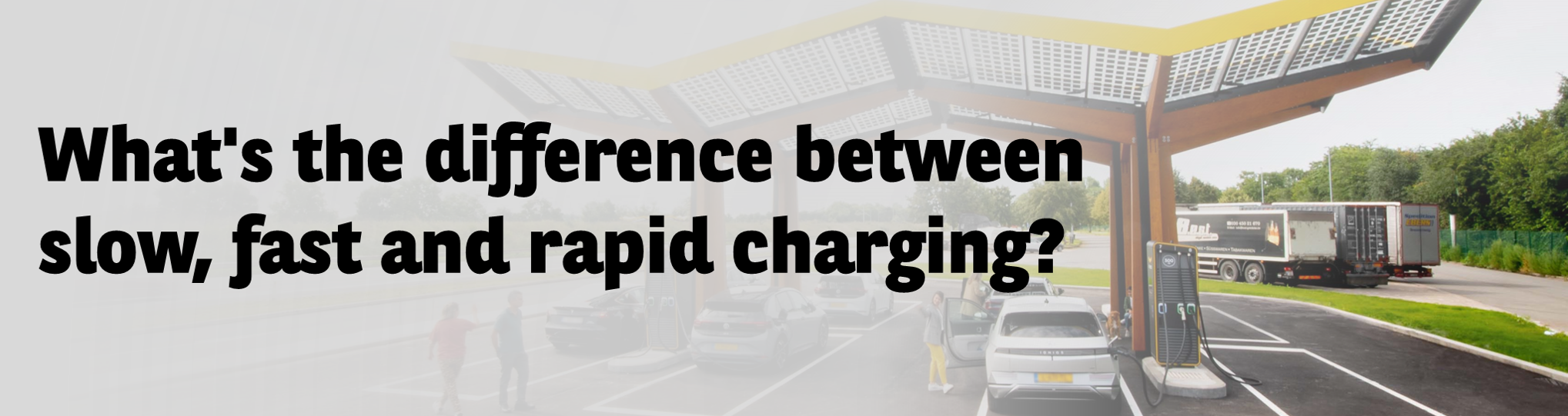
Rapid charging refers to chargers operating between 50-150kW. You typically won’t find speeds between 22-50kW, so anything in this range falls under rapid charging. These are the kinds of chargers you’ll encounter at motorway service areas, ideal for topping up your battery during longer trips. Rapid charging can give you enough power to reach your destination or another charging point for a longer, slower charge if necessary.
4. Ultra-rapid charging
If you're frequently driving long distances and need to minimize your charging stops, ultra-rapid charging at 150kW or more will likely suit your needs. The fastest public chargers currently go up to 350kW. However, many electric vehicles won’t charge at the maximum rate, instead limiting themselves to a lower speed, such as 170kW, to protect the battery from degradation.
With these higher speeds, manufacturers often quote charge times from 10% to 80% rather than a full charge. Even if your car limits itself to 170kW, you could charge a 70kWh battery pack to 80% in as little as 18 minutes. This makes ultra-rapid chargers perfect for quick stops on long road trips.

ALL INFORMATION IN ONE PLACE !